Accepire Insights
Software Dev May 6, 20268 min read
What Is Custom Software? A Complete Guide for UAE Businesses (2026)
Article Brief
CategorySoftware Dev
Read Time8 min read
PublishedMay 6, 2026
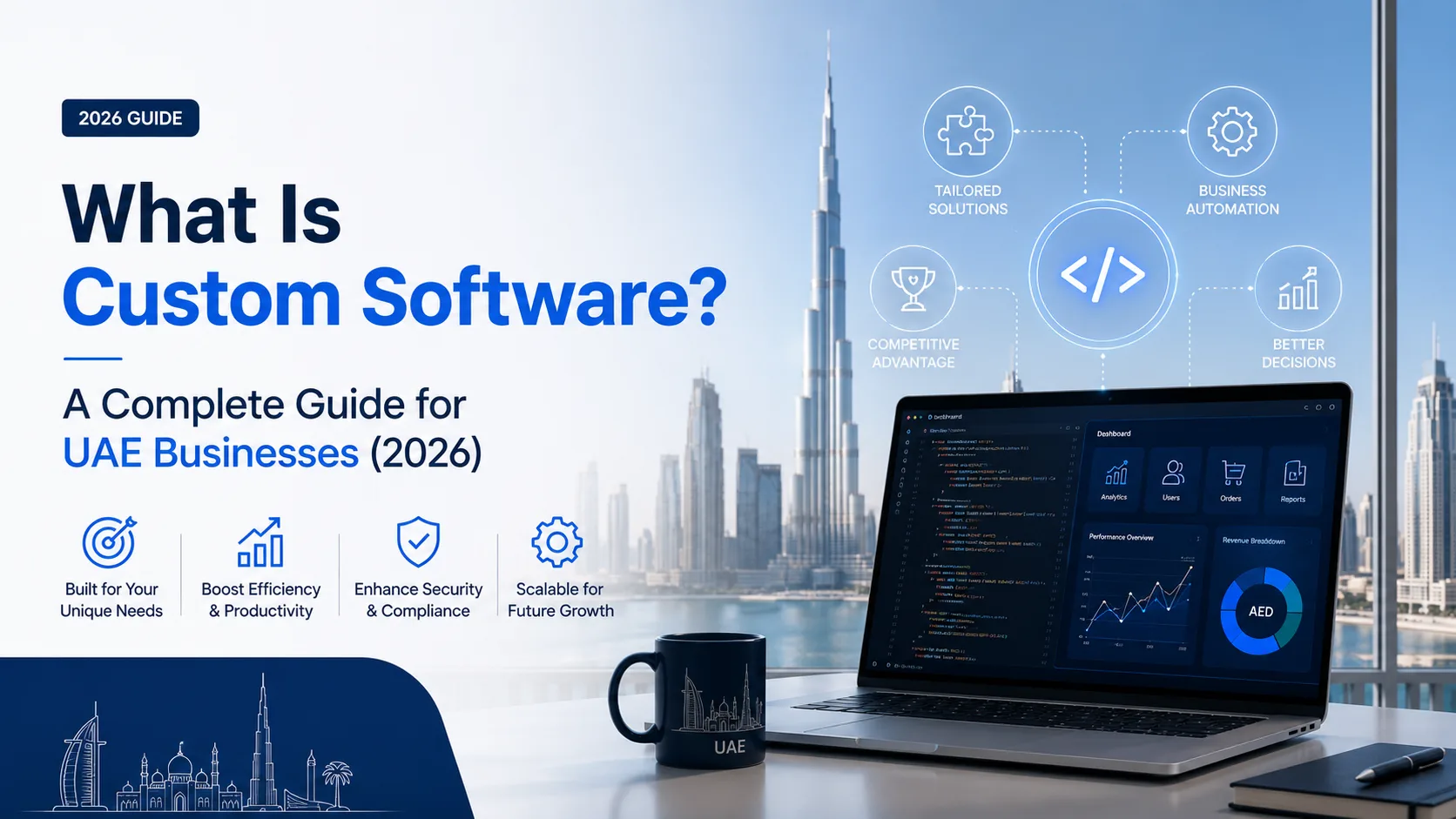
TL;DR Custom software is built from the ground up to fit your organization's exact workflows. Unlike off-the-shelf products, it provides 100% code ownership, native GCC compliance, and limitless scalability. While it requires a higher upfront investment and longer lead times (8–12 weeks for an MVP), it eliminates recurring license fees and provides a massive competitive advantage in the UAE’s rapidly modernizing market.
What is custom software? Custom software is a private application built specifically for one company's workflows, users, integrations, and compliance needs. Unlike off-the-shelf software, it is designed around how your business already operates and can be extended as you grow and meet specific regional regulations like the UAE’s PDPL.
Many businesses across the UAE and the wider GCC still manage critical operations through a "patchwork" of tools: manual spreadsheets, WhatsApp threads, disconnected CRMs, and verbal approvals. While these methods might work for a small team, they eventually lead to data silos, security risks, and a ceiling on growth.
Custom software development replaces these fragmented workflows with a secure, integrated ecosystem built specifically for the way your organization actually functions.
Custom Software vs. SaaS vs. Low-Code
Choosing the right technology stack is a strategic decision that impacts your long-term ROI.
| Feature | Custom Software | Off-the-Shelf (SaaS) | Low-Code / No-Code |
|---|---|---|---|
| Ownership | You own the source code | Subscription-based | Platform-dependent |
| Fit | 100% Alignment with workflows | 80% Fit (Generic) | High but limited by templates |
| Data Residency | Local GCC Hosting (PDPL) | Often Offshore (US/EU) | Platform-defined |
| Integration | Native / Legacy System Sync | Limited via API | Moderate |
| UX/UI | RTL / Arabic-First Design | Standard / Translation-based | Rigid / Template-based |
When Is Custom Software Worth the Investment?
At Accepire, we believe technology should be a multiplier, not a hurdle. We recommend building custom solutions only when the cost of inefficiency or compliance risk is higher than the cost of building.
Who Should Choose Custom Software?
- Businesses with Complex Workflows: If your process requires niche automation that generic tools can't handle.
- Regulated Industries: Fintech, Healthcare, and Corporate Services requiring strict UAE Personal Data Protection Law (PDPL) compliance.
- Competitive Advantage Seekers: If your software is your product (e.g., a unique logistics engine or a proprietary fintech algorithm).
- Arabic-First Organizations: Companies needing seamless RTL (Right-to-Left) user experiences and multilingual internal tools.
Who Should Stick to Off-the-Shelf (SaaS)?
- Early-Stage Startups: When you are still validating your basic business model.
- Simple Utility Needs: Standard email, basic project management, or simple accounting tasks.
- Limited Maintenance Capacity: Businesses that do not have the budget for ongoing updates and security patches.
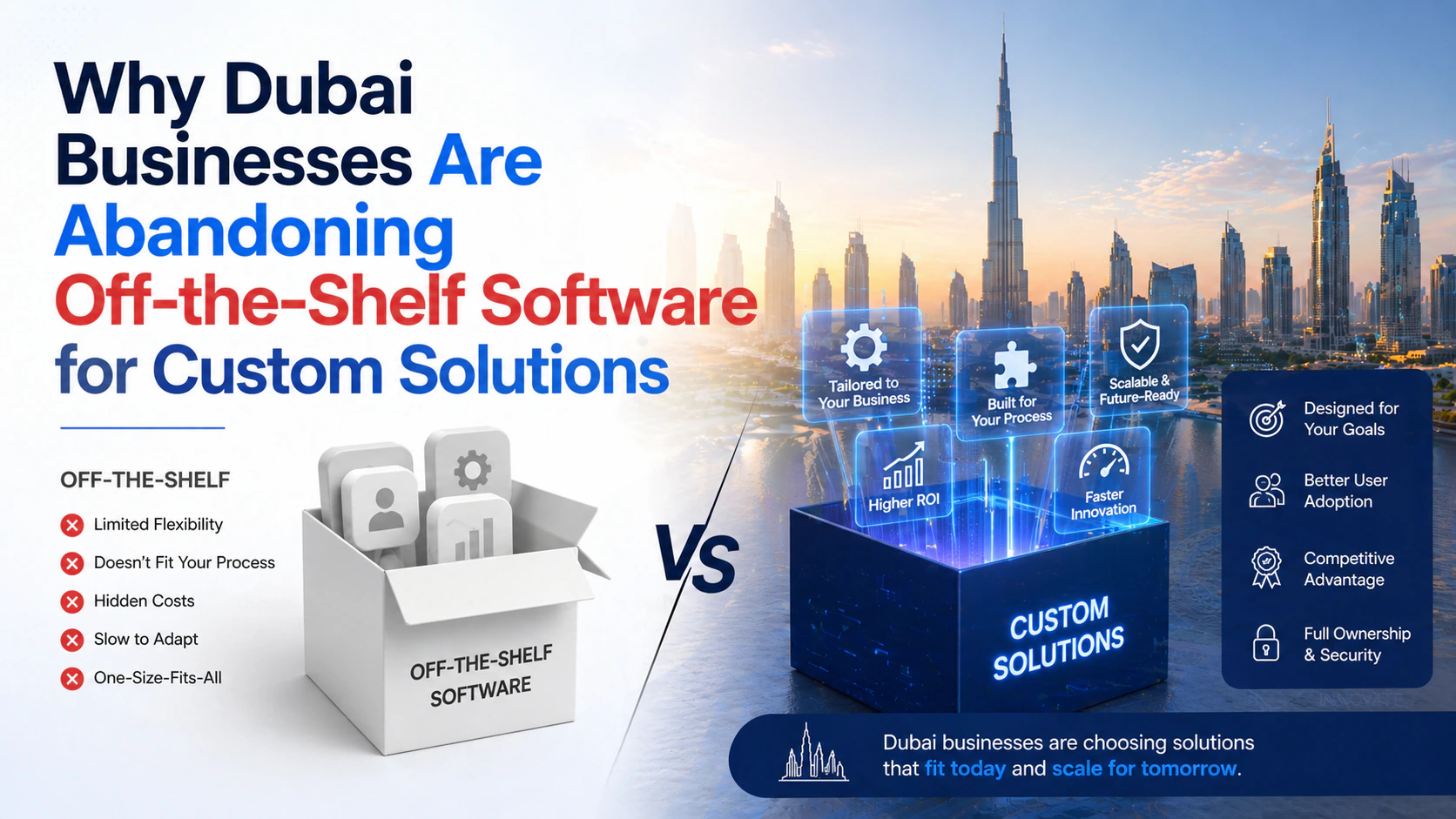
The Cost of Doing Nothing (Most Businesses Ignore This)
Sticking with generic tools doesn’t just slow you down, it quietly drains revenue.
- Manual work multiplies as your team grows
- Data gets scattered across tools with no single source of truth
- Compliance risks increase when data sits on offshore servers
- Your product roadmap becomes dependent on someone else’s platform
At a certain point, you're not saving money, you're bleeding it.
Real-World Impact: The GCC Landscape
Digital transformation is driving the GCC's smart-cities market toward a projected US$1.144 trillion by 2033. For example, modern logistics firms in Dubai have achieved 40% efficiency gains by replacing disconnected spreadsheets with bespoke supply-chain platforms. Similarly, the NEOM port project utilized custom Terminal Operating Systems to unify project management and reduce reporting time by 50%.
The Accepire Approach: Architecture, Not Just Apps
We specialize in cloud-native engineering and high-performance software for businesses that refuse to settle for "generic".
- Discovery & Strategy: We don't just take orders; we act as senior consultants to identify where automation will drive the most profit.
- MVP & Starter Sprints: We prove value quickly. Instead of a year-long wait, we launch a Minimum Viable Product (MVP) in 8 –12 weeks.
- Modern Tech Stack: We build using high-performance languages like Rust, Go, and Python, ensuring your system is scalable and secure.
- Zero-Trust Security: Every build follows international standards (SOC2, PCI-DSS) and local GCC regulations.
Case Study: UAE Logistics Transformation
The Challenge: A major logistics firm in Dubai was struggling with disconnected spreadsheets and manual fleet scheduling, leading to reporting delays and missed delivery windows.
The Solution: Developed a bespoke, cloud-native supply-chain platform.
- Integrated Fleet Management: Real-time tracking and automated driver assignments.
- Automated Invoicing: Native integration with UAE tax and accounting protocols.
- Multilingual Interface: Full Arabic/English support for a diverse workforce.
The Results:
- 40% Improvement in warehouse turnaround efficiency.
- 50% Reduction in monthly management reporting time.
- Total Data Sovereignty: All data hosted on-shore in the UAE.
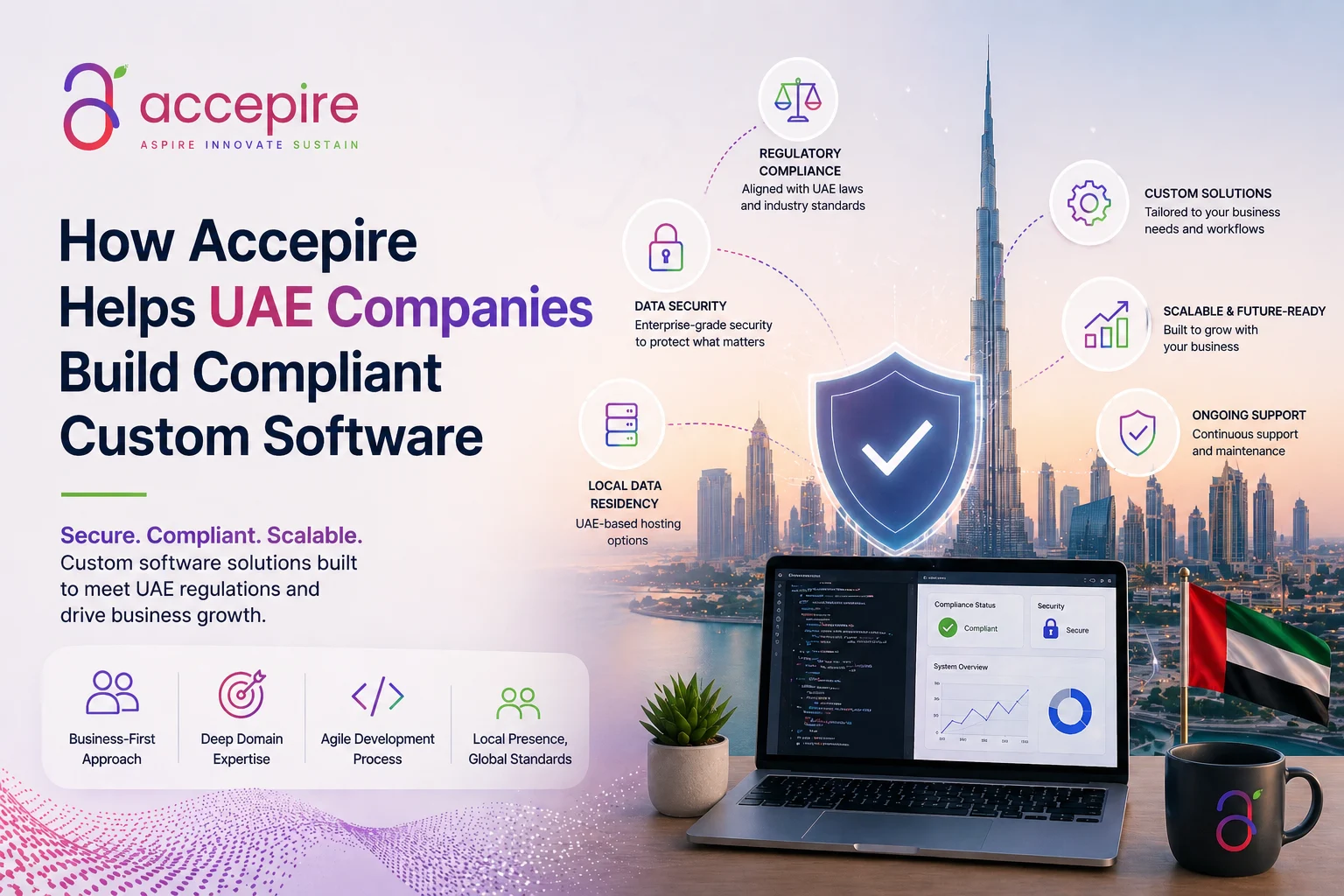
Industries We Serve: Solving Complex GCC Challenges
We don't just build apps; we solve industry-specific "friction points".
- Fintech: Automated invoice processing, compliance audits, and secure payment gateway integrations that meet Central Bank standards.
- Hospitality: Custom property management systems and personalized guest experience portals designed for high-end regional service.
- eCommerce: Omnichannel platforms with local inventory sync and localized payment methods like Mada, Tabby, or Tamara.
- Healthcare: Telemedicine platforms and patient record systems compliant with UAE health data residency laws.
- Logistics: Fleet management and warehouse automation that handles the unique heat-map and routing challenges of the region.
Frequently Asked Questions
If you are using three or more different tools to manage one process, or if you are frequently saying "our software doesn't allow us to do that," it is time for a bespoke solution.
Conclusion: Future-Proof Your Growth
In the UAE and GCC, "standard" is no longer enough to stay competitive. As government initiatives like Dubai 10X and Saudi Vision 2030 push for total digital transformation, owning your technology stack isn't just a luxury, it’s a strategic necessity. While off-the-shelf tools can bridge the gap today, long-term market leaders are those who build systems that adapt to them, not the other way around.
Next Steps
Ready to Stop Working Around Your Software?
If your team is constantly adjusting processes to fit your tools, it’s already costing you more than custom development would. Book a free 20-minute audit with a senior engineer. You’ll get:
- A breakdown of inefficiencies in your current stack.
- A realistic build-vs-buy recommendation.
- A 72-hour action plan tailored to your business.
Microsoft for Startups Founders Hub Member